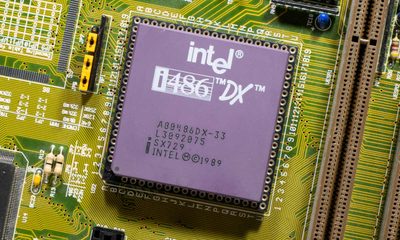
 i486
Soundcard · 1994
Creative Labs Sound Blaster 16
Works
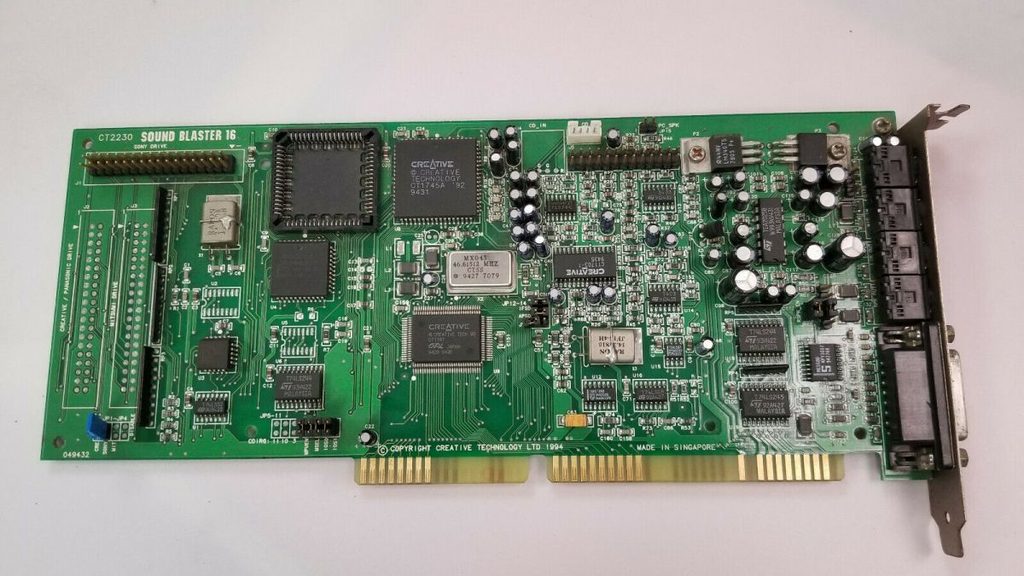
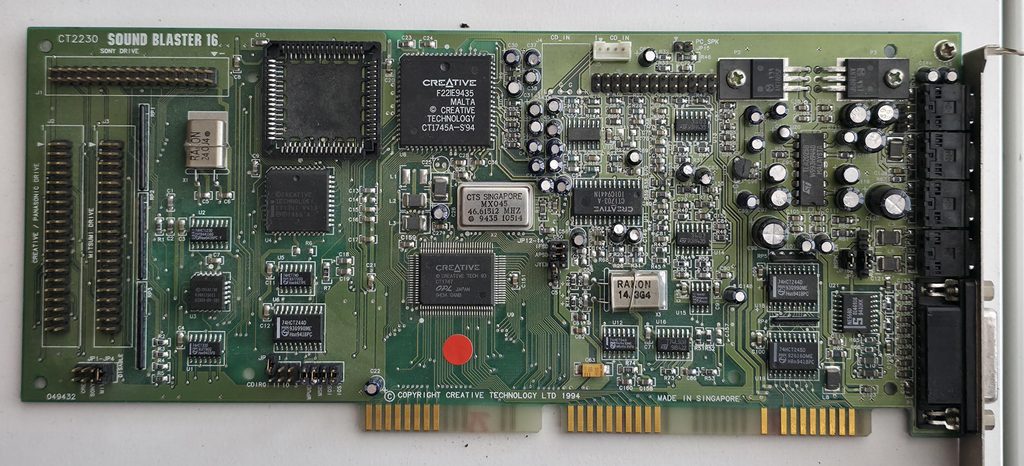
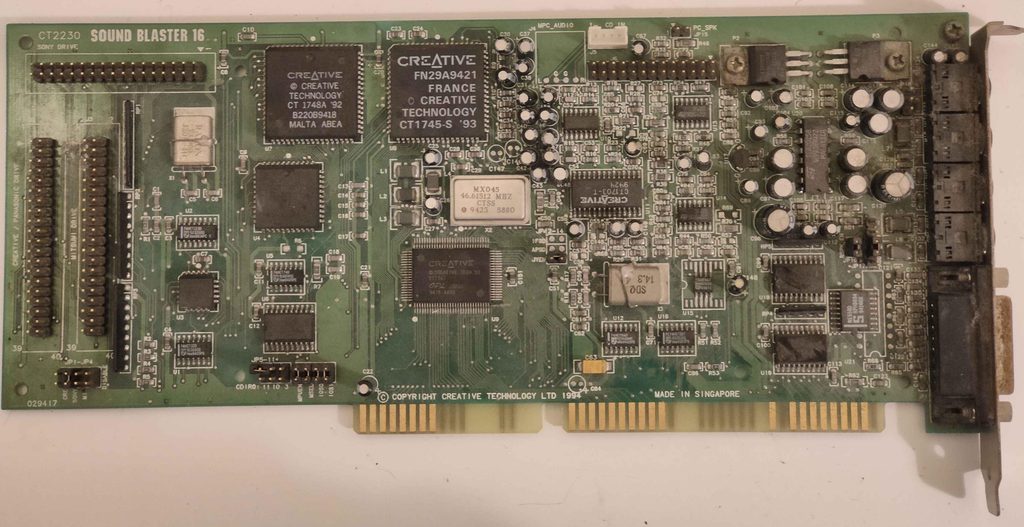
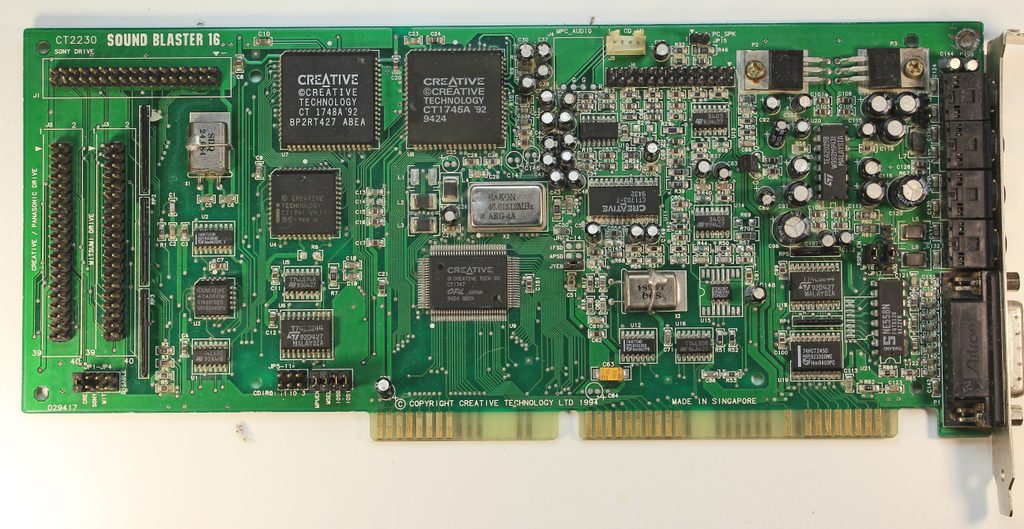
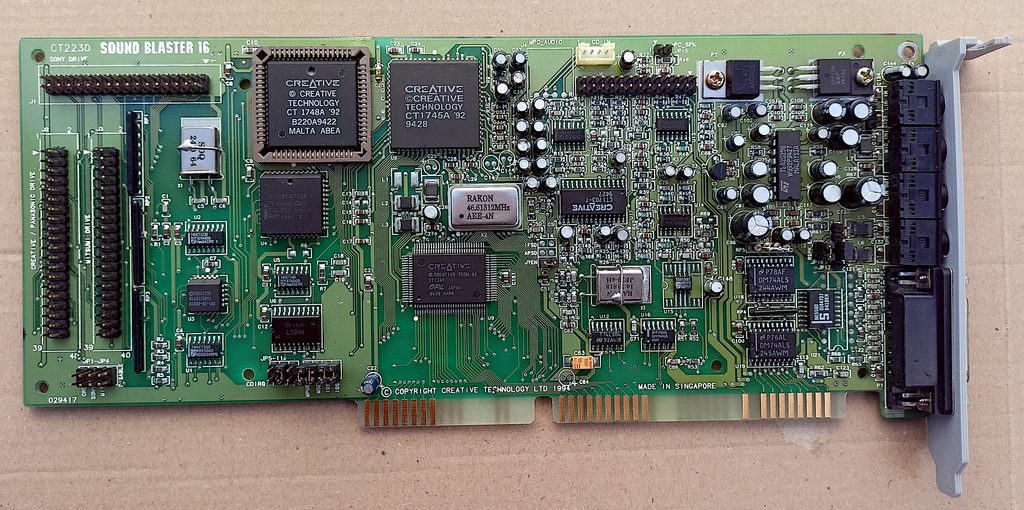
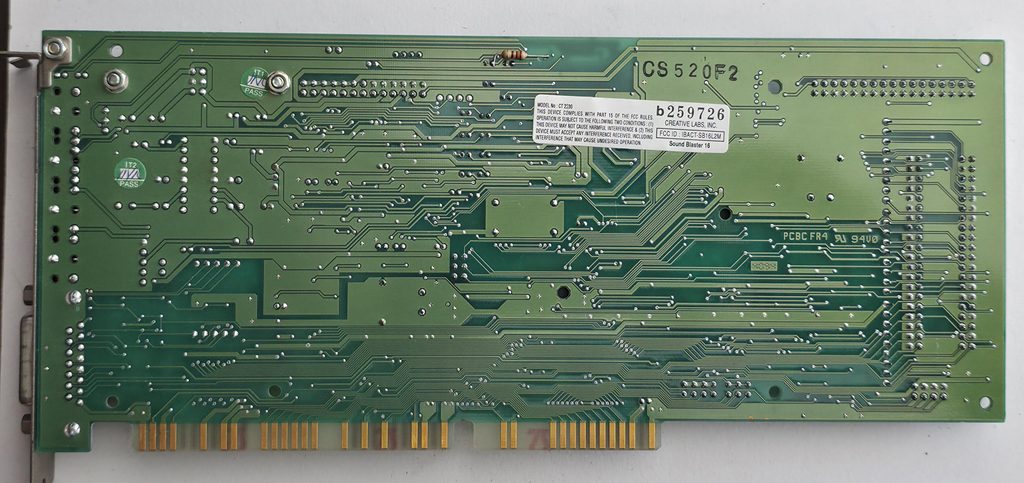
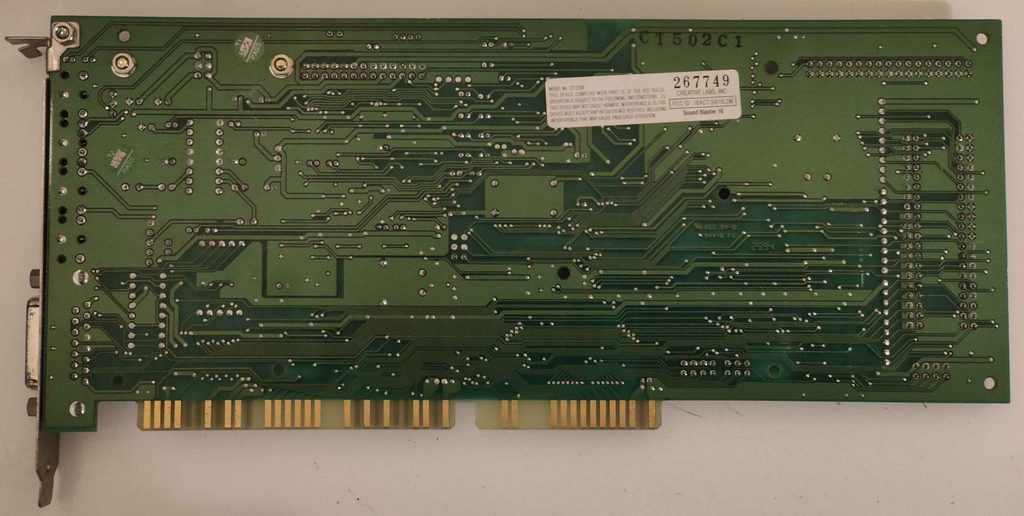
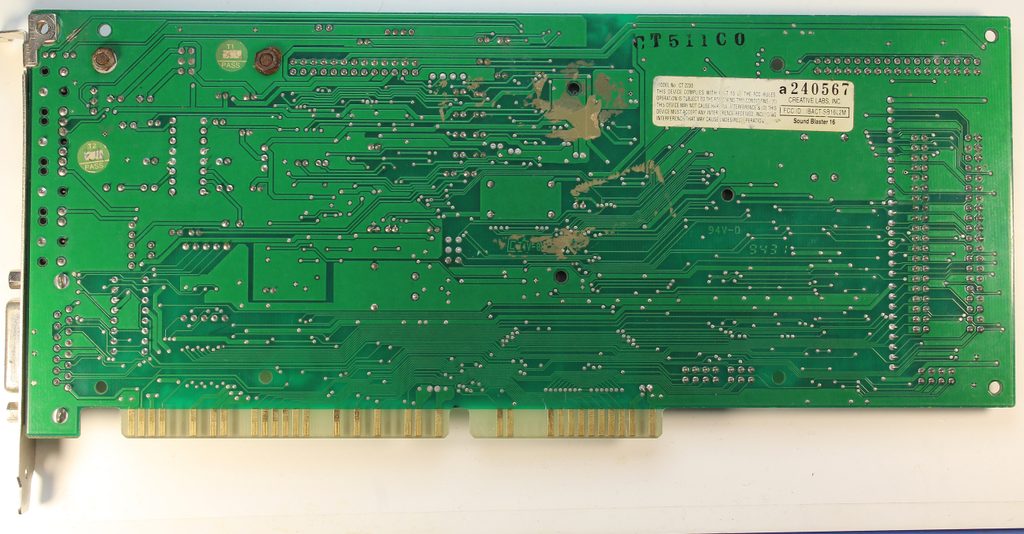
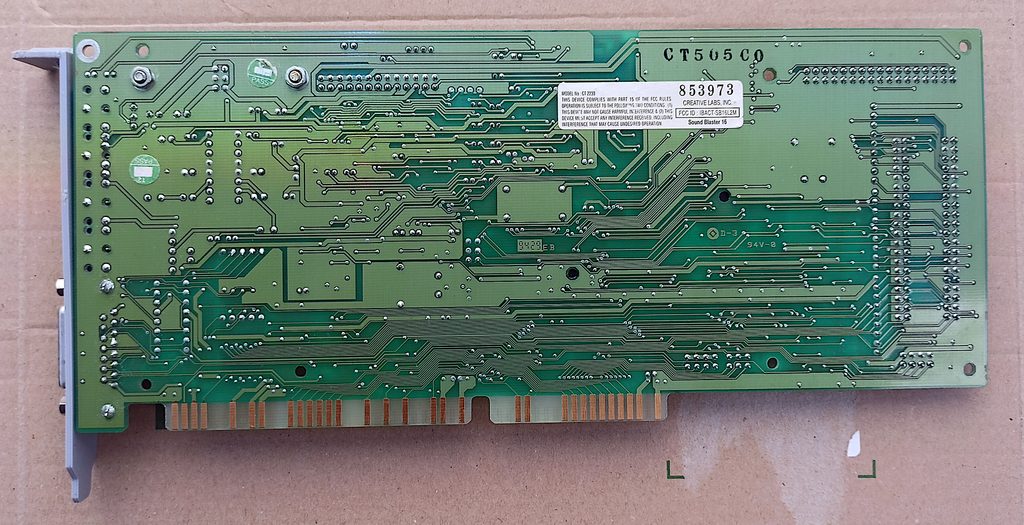
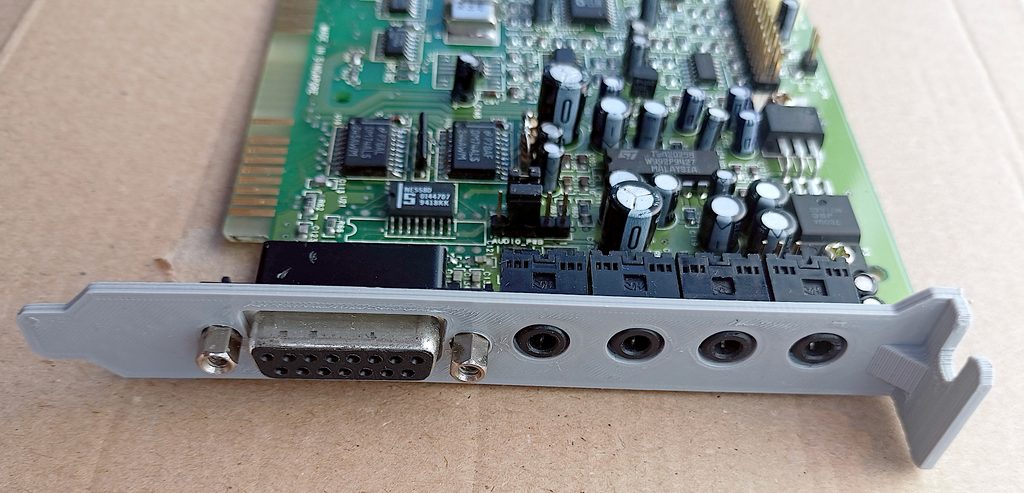
Images from The Retro Web, resized: CircusCat (CC BY-SA 4.0, 2 images); Carlos S. M. (CC BY-SA 4.0, 2 images); computerguy096 (CC BY-SA 4.0, 2 images); Necroware (CC BY-SA 4.0, 3 images)
Details
| Year | 1994 |
| Model | CT2230 |
| Interface | ISA 16Bit |
| Fm synth | CT1747 (v4.13)(Yamaha YMF262 embedded) |
| Yamaha OPL | OPL3 |
| PnP | no |
| Links | The Retro Web (external) |
Notes
Sound Blaster 16 (CT2230, CT2239, CT2920, CT2929)
The CT2230, full name Sound Blaster 16 MCD ASP (Multi-CD with ASP chip) was the first of the 2nd-generation Sound Blaster 16 cards. Like the late 1st-gen CT1750 it got Panasonic, Sony and Mitsumi CD-ROM interface headers. These came with an integrated Yamaha FM synthesizer in a new ASIC, the CT1747. Because it was actual Yamaha hardware within, it got the "OPL" logo stamped on it.
| Standards | Ad Lib, Sound Blaster, Sound Blaster Pro, Sound Blaster 16 |
| Ports | Speaker-Out, Mic-In, Line-In, Line-Out, Game/MIDI port |
| CD-ROM | Panasonic, Sony and Mitsumi |
| Wavetable | Wave Blaster header |
The CT2230 and CT2290 seem to be the most loved SB16s because they offer the lowest noise output of all the SB16 cards and are not Plug & Play. This is good because we retro gamers like to have our choices at the hardware level! Plug & Play was in its infancy in 1994, and would make configuring your card almost impossible outside of Windows.
Hanging Note Bug
The Hanging Note Bug on the Sound Blaster 16 is a frustrating issue that disrupts MIDI playback in games like Hexen and Doom, causing notes to stick and loop endlessly. Specific to DSP chip versions 4.11, 4.12, and 4.13, the bug stems from faulty firmware that mishandles certain MIDI commands, resulting in persistent audio glitches.
Used in